by Lamborghini Fan 1 | May 13, 2025 | Motorsports, Super Trofeo NA
Wayne Taylor Racing (WTR) reinforced its early-season dominance in the 2025 Lamborghini Super Trofeo North America season, adding four victories at the iconic WeatherTech Raceway Laguna Seca to their impressive five wins secured at Sebring International Raceway. However, the IMSA TireRack.com Monterey SportsCar Championship weekend witnessed several other teams stepping into the winner’s circle, showcasing the depth of talent and competition within the series.
Flying Lizard Motorsports (Pro-Am), Precision Performance Motorsports (Am), One Motorsports (LB Cup), and MLT Motorsports (LB Cup) all celebrated at least one victory during the action-packed weekend, proving that the championship battle is far from a one-team show.
The spoils were shared amongst Lamborghini dealerships as well, with Lamborghini Palm Beach represented by the victorious Wayne Taylor Racing, Flying Lizard Motorsports, and Precision Performance Motorsports entries. Lamborghini Newport Beach saw its colors fly high with One Motorsports’ LB Cup win, while Lamborghini Greenwich celebrated MLT Motorsports’ LB Cup triumph.
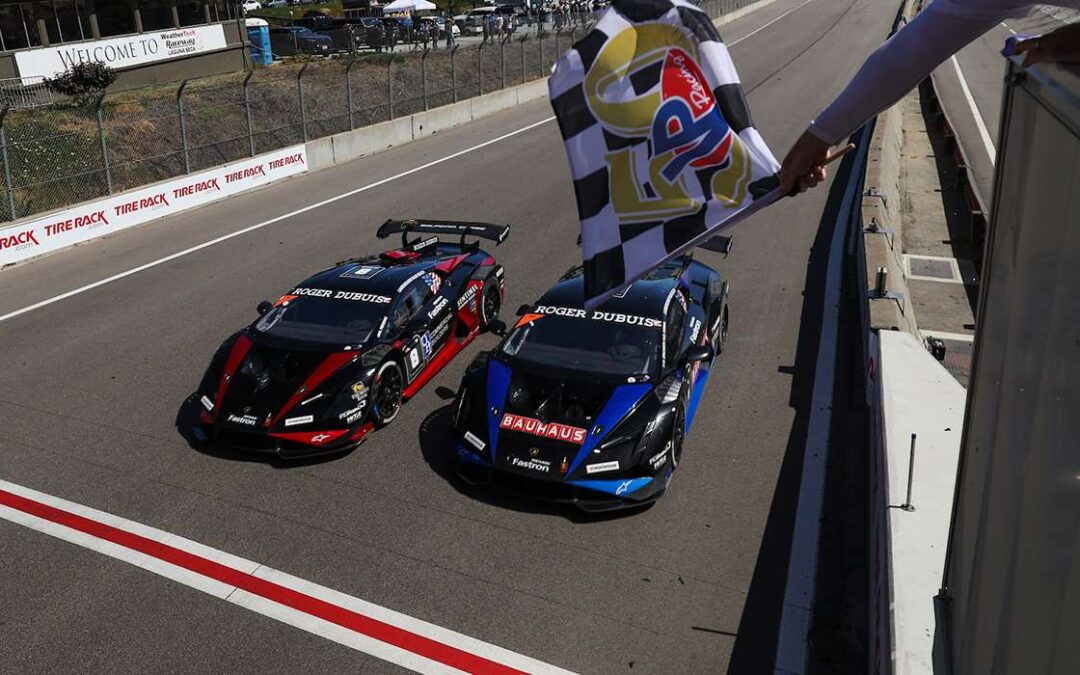
The weekend was highlighted by a stellar performance from Nick Persing in the No. 8 Wayne Taylor Racing, Lamborghini Palm Beach, Lamborghini Huracán Super Trofeo Evo2. The Boise State University student, who previously notched four Pro-Am wins last season (including one at Laguna Seca), secured a remarkable double victory in the Pro class at what he considers his “home track.” Sunday’s Race 2 was a true thriller, with Persing narrowly edging out his WTR teammate Danny Formal in the sister No. 1 Huracán by an incredibly tight margin of just 0.006 of a second in a breathtaking photo finish.
The theme of “bounce back” resonated throughout the weekend. Flying Lizard Motorsports’ Slade Stewart and Andy Lee, piloting their fan-favorite pink No. 14 “unicorn livery” Huracán, repeated their 2024 Pro-Am victory at Monterey in Saturday’s Round 3 after a disappointing non-start to their season opener at Sebring. Despite a challenging Round 3 that saw incidents sideline three WTR cars, the team demonstrated its resilience. Anthony McIntosh and Brendon Leitch emerged victorious in Pro-Am in Round 4, while Glenn McGee and Graham Doyle claimed the Am class win.
David Staab continued his family’s strong tradition at WeatherTech Raceway. The Precision Performance Motorsports driver secured an Am class victory in Round 3, marking the family’s fourth consecutive year on the podium at the Monterey circuit. This followed his brother Michael Staab’s impressive double LB Cup win in a similar No. 48 PPM Huracán in 2024. In the LB Cup class, Nick Groat and Adrian Kunzle split the victories. Kunzle’s Round 4 win, driving the No. 42 MLT Motorsports entry, snapped Groat’s three-race winning streak at the start of his championship defense.
Pro Class:
Race 1: Persing, starting from fourth overall and third in Pro, initially trailed his teammate Danny Formal in the No. 1 Huracán and the No. 29 TR3 Racing entry of Will Bamber and Elias de la Torre IV. However, when Ericsson in the No. 1 car encountered a mechanical issue while leading on Lap 23, the door opened for a captivating battle between de la Torre and Persing. Persing executed the decisive move at the inside of Turn 11, crossing the finish line a mere 0.036 seconds ahead. A subsequent incident for the No. 29 car elevated Cameron Lawrence and Werner Neugebauer in the No. 68 RAFA Racing Huracán and Scott Huffaker and Jaden Conwright in the No. 22 World Speed Huracán to the Pro podium.
Race 2: Starting from pole position, Persing led the majority of the 31-lap race, only relinquishing the lead during the pit stop cycle. A late restart with just over two minutes remaining set the stage for a thrilling two-lap sprint to the finish. Persing expertly defended his lead against a hard-charging Formal, who made a daring over-under passing attempt exiting Turn 11. Formal’s momentum carried him alongside Persing, but he ultimately fell short by an agonizing 0.006 of a second. Colin Queen and Enzo Geraci in the No. 36 ANSA Motorsports Huracán, a Lamborghini Squadra Corse Young Driver Program duo, secured their first podium finish of the season in third.
Pro-Am Class:
Race 1: The Pro-Am race was a chaotic affair with four different leaders. Flying Lizard Motorsports initially led with both its entries. The No. 41 Huracán of Marc Miller and Paul Nemschoff stayed out longest during the pit window but ultimately fell back. Andy Lee, taking over the No. 14 Huracán co-driven with Slade Stewart, surged to the lead. Darius Trinka and Tadas Karlinskas finished second in their No. 11 Kaizen Autosport Huracán, while series returnee AJ Muss and Jackson Lee claimed third in the No. 88 Forty7 Motorsports entry after limited practice.
Race 2: McIntosh and Leitch in the No. 69 Wayne Taylor Racing Huracán mirrored Persing’s dominance, leading for 26 of the 31 laps and only losing the top spot during the pit stop sequence. The two Flying Lizard Motorsports cars of Nemschoff/Miller (No. 41) and Stewart/Lee (No. 14) completed the Pro-Am podium.
Am Class:
Race 1: Despite five different cars leading at least one lap, David Staab in the No. 48 Precision Performance Motorsports Huracán led all but four laps. Dean Neuls finished second in the No. 70 TR3 Racing Huracán, ahead of the all-female duo of Lindsay Brewer and Jem Hepworth in the No. 2 RAFA Racing Huracán, who secured their second consecutive podium after their historic finish at Sebring.
Race 2: McGee and Doyle in the No. 10 Wayne Taylor Racing Huracán led for 29 of the 31 laps, only briefly losing the lead during the pit stop cycle. The TR3 Racing entries of Mateo Siderman (No. 63) and Dean Neuls (No. 70) rounded out the Am podium after several position changes following the final restart.
LB Cup Class:
Race 1: Nick Groat in the No. 57 ONE Motorsports Huracán engaged in a race-long battle with Adrian Kunzle, who made a class switch to the expanded 10-car LB Cup grid. Kunzle finished second in the No. 42 MLT Motorsports entry, with Mark Brummond third in the No. 52 Forty7 Motorsports Huracán.
Race 2: Kunzle emerged as the first non-Groat winner in the LB Cup class in 2025 after a late-race fight with Rocky T. Bolduc in the No. 99 RAFA Racing Huracán. Ray Shahi finished third in the No. 65 Forte Racing Huracán.
The Lamborghini Super Trofeo North America season continues to deliver thrilling racing action, with Wayne Taylor Racing showing formidable pace while other teams rise to challenge their dominance. The Laguna Seca weekend provided a captivating spectacle, setting the stage for an exciting continuation of the 2025 championship battle.
Watch the full length broadcasts and review the results here….
by Lamborghini Fan 1 | May 11, 2025 | Super Trofeo NA
The Lamborghini Super Trofeo 2025 races at Laguna Seca, held on May 10th and 11th, delivered thrilling action. Saturday’s race saw Nick Persing secure a dramatic Pro class victory. Sunday’s race witnessed Persing achieve back-to-back wins in a photo finish. The ProAm class also had intense battles, with multiple lead changes. The LB Cup saw a continuation of close racing. Overall, the Laguna Seca weekend provided exciting wheel-to-wheel competition across all classes in the Lamborghini Super Trofeo North America series.
by Lamborghini Fan 1 | May 1, 2025 | Motorsports, Super Trofeo NA
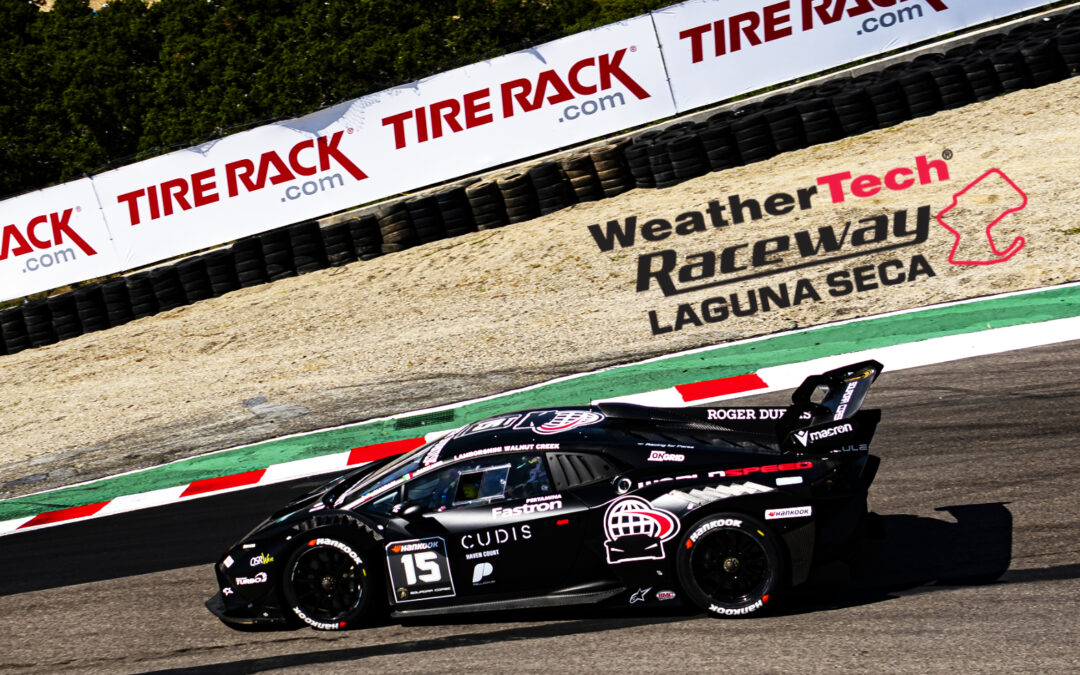
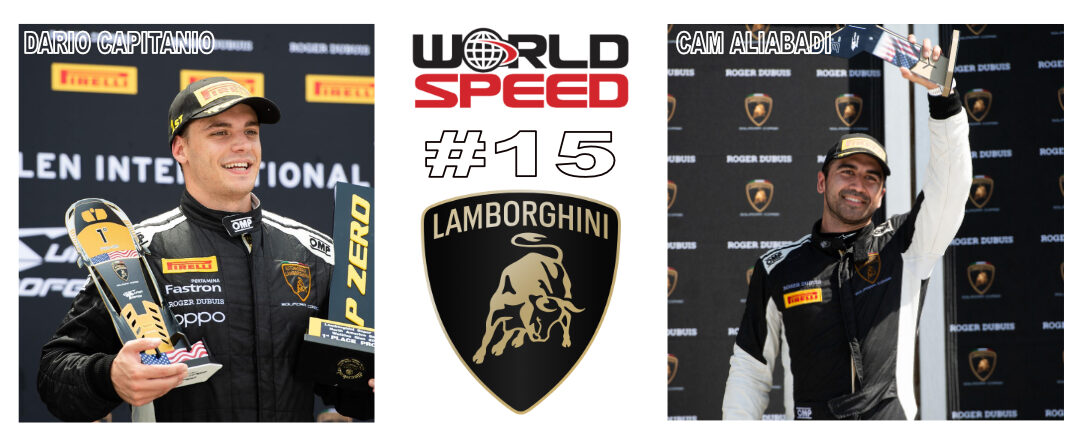
World Speed Motorsports (WSM) announced today the addition of drivers Cam Aliabadi and Dario Capitanio to their Lamborghini Super Trofeo team for rounds three and four of the championship at WeatherTech Laguna Seca Raceway in Monterey. The duo will pilot the #15 WSM Lamborghini Super Trofeo Huracan in the upcoming event.
Dario Capitanio brings a wealth of experience to the team. In 2021, he secured a Lamborghini Super Trofeo North America Pro-Am class victory at Watkins Glen. His diverse racing background includes campaigns in the Huracan Super Trofeo, LMP3 cars in the European Le Mans Series, and a Ferrari 488 GT3 in the GT Winter Series in Europe. Capitanio’s recent successes in 2024 feature a podium finish in the GT3 Winter Series and a pole position start at the prestigious Indianapolis Motor Speedway in the SRO GT4 Americas championship.
Cam Aliabadi’s journey in motorsports began in 2016 with Mercedes-AMG driving schools. Since then, he has amassed significant track experience through over a dozen classes across renowned circuits in the United States and Europe, including Laguna Seca Raceway, Circuit of the Americas, Spa Francorchamps, and the Nurburgring Nordschleife. Following his victory in the 2021 Lamborghini Pilota Program, Aliabadi embarked on his rookie season in the 2022 Lamborghini Super Trofeo Series. His debut year was marked by impressive results, including four podium finishes and a notable win at WeatherTech Laguna Seca Raceway. In 2024, Aliabadi competed in the #15 World Speed LST for one event, achieving a podium finish alongside World Speed open-wheel champion Jaden Conwright.
The addition of the experienced pairing of Aliabadi and Capitanio strengthens World Speed Motorsports’ lineup for the highly anticipated Lamborghini Super Trofeo event at WeatherTech Laguna Seca. WSM will run the #15 in the Pro/Am class, alongside the #22 WSM/Graham Prewett car in the Pro class. The #22 is piloted by Jaden Conwright and Scott Huffaker. The WeatherTech Laguna Seca Raceway races take place May 9th -11th.
More information: www.WorldSpeed.com
by Lamborghini Fan 1 | Apr 24, 2025 | Etcetera, Vintage / History
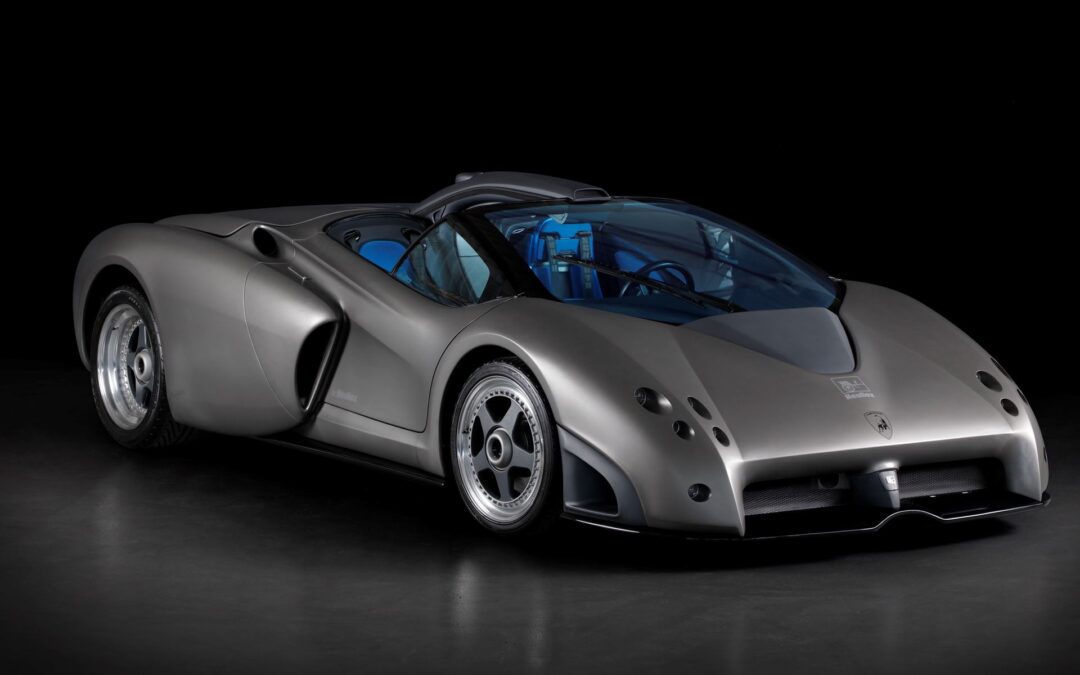
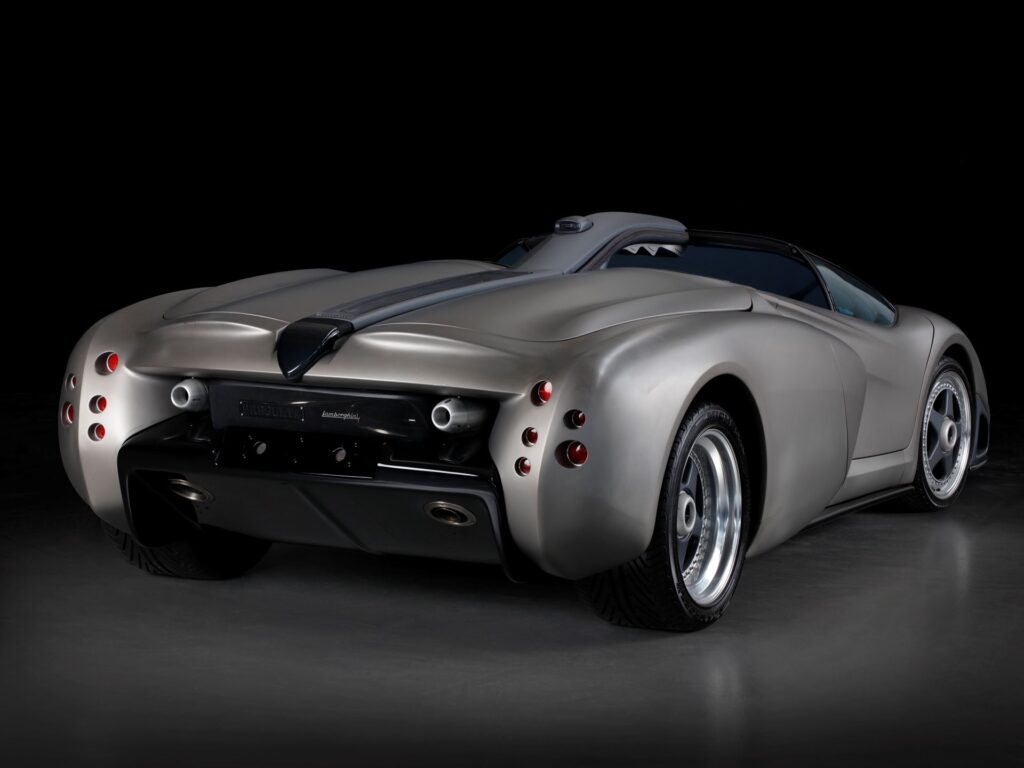
The late 1990s. The air crackled with technological advancement, and the automotive world was no exception. Amidst the roar of established supercars, a whisper emerged from Sant’Agata Bolognese – a concept car so radical, so audacious, it left enthusiasts breathless. This was the Lamborghini Pregunta, a name that translates to “question” in Spanish, and indeed, it posed a fascinating “what if?” to the future of Lamborghini.
Imagine a machine stripped bare, honed for pure speed and visceral driving pleasure. The Pregunta wasn’t about opulent interiors or everyday practicality; it was a focused instrument, a glimpse into Lamborghini’s potential foray into the realm of ultra-high-performance, track-inspired road cars. Unveiled at the 1998 Paris Motor Show, it was a stark departure from the Diablo that was then the marque’s flagship.
Its design was undeniably striking. Gone were the softer curves; in their place, sharp angles and aggressive lines dominated. The low-slung profile, the prominent rear wing, and the almost fighter-jet-like cockpit screamed purpose. Penned by Heuliez, a French coachbuilder, the Pregunta borrowed heavily from contemporary Formula 1 aesthetics. The exposed carbon fiber elements hinted at its lightweight construction, a crucial factor in achieving its performance goals. The matte grey paint, the same used on the Dassault Rafale fighter jet, further emphasized its aviation inspiration.
Beneath the dramatic skin lay the heart of a beast – a naturally aspirated 5.7-liter V12 engine, the same magnificent unit found in the Diablo SV. However, in the Pregunta, it was rumored to have been tweaked to produce even more power, pushing beyond the 530 horsepower mark to a claimed 530 bhp at 7100 rpm. The torque figure was equally impressive at 446.2 ft lbs at 5500 rpm. Unlike the Diablo’s all-wheel-drive system, the Pregunta channeled its power exclusively to the rear wheels through a 5-speed manual transmission, contributing to its lighter weight of around 1650 kg (3638 lbs).
Coupled with a lightweight chassis and advanced aerodynamics, the projected performance figures were staggering. Talk circulated of a top speed exceeding 333 km/h (207 mph) and a 0-100 km/h (0-62 mph) sprint in a mere 3.9 seconds – numbers that would have placed it firmly in the hypercar echelon of its time, even rivaling the Ferrari F50 in terms of power output.
Stepping inside the Pregunta would have been an exercise in focused minimalism. The emphasis was clearly on the driver. Racing bucket seats, a digital instrument cluster sourced from Formula 1 by Magnetti Marelli, and a spartan dashboard reinforced the car’s track-oriented nature. Rear-view mirrors were replaced by cameras with integrated screens, and a GPS navigation system was present, further echoing its fighter jet inspiration. The interior featured a striking blue dashboard and seats, contrasted by grey elements.
However, the Lamborghini Pregunta remained just that – a question, a concept. Despite the buzz and the drooling admiration it garnered at the 1998 Paris Motor Show and the 1999 Geneva Motor Show, it never entered series production. Lamborghini, under different ownership at the time, likely deemed the project too niche or perhaps not aligned with their immediate strategic direction as Audi took over the company around this period. It is believed that Lamborghini’s intention with the Pregunta was also to celebrate the 50th anniversary of their participation in the Paris Motor Show.
Only one Pregunta was ever officially built by Heuliez in collaboration with Lamborghini. Following its debut and Audi’s acquisition of Lamborghini, the rights to the car’s design were not sold, making it an exceptionally rare one-off. It eventually found its way into private hands, becoming a highly sought-after and incredibly rare piece of Lamborghini history. In 2013, this unique machine was listed for sale at around €1.6 million, highlighting its desirability among collectors.
Today, the Lamborghini Pregunta serves as a tantalizing reminder of a road not taken, a glimpse into a potentially more hardcore and track-focused future for the raging bull. While Lamborghini continued to produce formidable supercars, the Pregunta’s radical spirit and uncompromising focus on performance remain a unique and captivating chapter in the brand’s storied legacy. It begs the question: what if Lamborghini had dared to answer “yes” to the Pregunta? The automotive landscape might look very different today, potentially seeing a more direct lineage to hypercars from Sant’Agata before models like the Reventón and Veneno emerged much later, taking inspiration from its bold design.
by Lamborghini Fan 1 | Apr 18, 2025 | Sedans / SUVs, Vintage / History
A Bull in the Bush
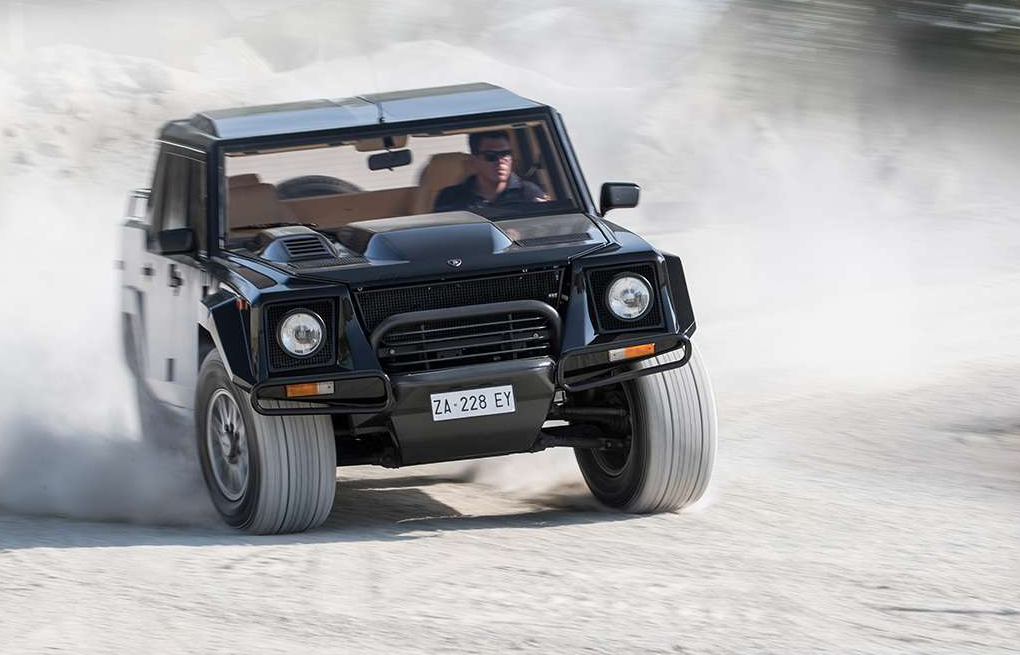
In the annals of automotive history, certain vehicles arrive not merely as transportation, but as seismic shifts. The Lamborghini LM002, unleashed upon an unsuspecting world in 1986, was such a vehicle. At a time when the term “luxury SUV” was barely a whisper, Lamborghini, the purveyor of sleek, low-slung supercars, dared to defy convention, birthing a four-wheeled behemoth that was as audacious as it was groundbreaking.
The LM002’s origin story is as unconventional as the vehicle itself. Born from a failed military contract, this brute was initially conceived for combat, not carpool lines. Lamborghini’s engineers, their ambitions undeterred, repurposed their creation for civilian consumption. What emerged was a startling chimera: the heart of a Countach, the soul of a desert raider, and the swagger of a rock star.
A Dichotomy of Decadence
The LM002 was a study in contrasts. Its exterior, all sharp angles and imposing presence, was a far cry from the sculpted curves of its supercar brethren. This was a vehicle designed to conquer terrain, not turn heads on Rodeo Drive. Yet, step inside, and a different world awaited. Leather-clad opulence, wood trim, and a premium sound system cocooned occupants in unexpected luxury. It was a vehicle that could ford a river by day and valet park at the opera by night.
The Power Within
At the LM002’s core resided the legendary Lamborghini V12 engine, the same powerhouse that propelled the Countach to warp speed. While slightly detuned for off-road duty, it still delivered a visceral surge of power that could propel this three-ton titan to speeds that defied logic. This was no ordinary SUV; it was a supercar on stilts, a testament to Lamborghini’s engineering prowess and a harbinger of things to come.
A World Playing Catch-Up
In the late 1980s, the LM002 was an anomaly, a conversation starter, a head-scratcher. Automotive journalists grappled to categorize it. Was it a truck? An SUV? A status symbol? The answer, it turned out, was all of the above, and yet, none of them quite captured its essence.
Fast forward to today, and the automotive landscape is awash in luxury SUVs. Every manufacturer, from Bentley to Rolls-Royce, now offers a high-riding hauler, a testament to the prescience of the LM002. What was once an outlier is now the norm.
Legacy of the Rambo Lambo
The Lamborghini LM002 was more than just a vehicle; it was a statement. It was a declaration that Lamborghini could defy expectations, challenge conventions, and create a vehicle that was as comfortable in the desert as it was on the доро́га. It was a vehicle that was, in a word, ahead of its time.
Today, the LM002 enjoys a cult following among collectors and enthusiasts. Its rarity, its audaciousness, and its sheer presence ensure its place in automotive history. It is a reminder that sometimes, the most revolutionary ideas are born not from market research, but from a willingness to break the mold and forge one’s own path. And while Lamborghini has recently returned to the SUV segment with the Urus, the LM002 remains the untamed ancestor, the original bull that dared to roam where no supercar had gone before.
by Lamborghini Fan 1 | Apr 18, 2025 | Vintage / History
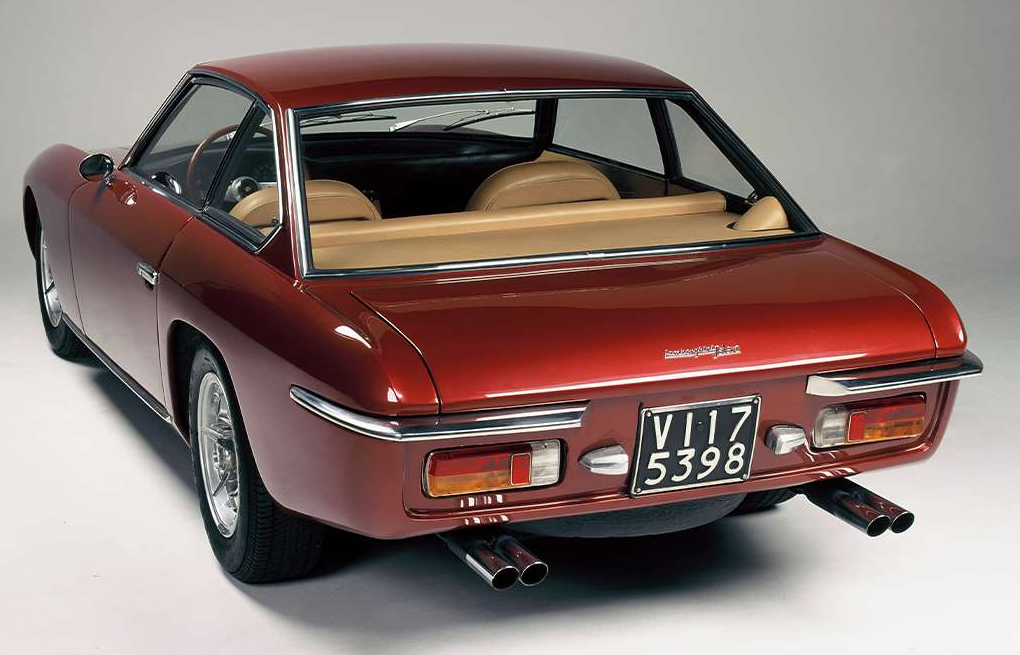
In the pantheon of raging bulls from Sant’Agata Bolognese, the Lamborghini Islero often stands slightly in the shadows, a more subtle and perhaps less flamboyant figure compared to its dramatic contemporaries like the Miura and Espada. Yet, this elegant 2+2 grand tourer, produced between 1968 and 1969, holds a unique and significant place in Lamborghini’s history, embodying Ferruccio Lamborghini’s personal vision of a refined yet potent Italian express.
Launched at the 1968 Geneva Motor Show as a direct successor to the 400 GT, the Islero aimed to offer a more comfortable and driver-focused experience without sacrificing the raw power that defined Lamborghini. Its name, like many of its stablemates, was derived from a legendary fighting bull – the very Islero that tragically ended the career of the famed matador Manuel Rodriguez “Manolete” in 1947, a testament to the car’s underlying ferocity.
A Departure in Design:
While its predecessors boasted elegant, curvaceous Touring coachwork, the Islero, penned by Mario Marazzi of Carrozzeria Marazzi (a firm established by ex-Touring employees), adopted a more angular and contemporary design language. The long bonnet, a hallmark of classic GT proportions, flowed into a sharply creased five-window cockpit. Pop-up headlights, a trendy feature of the era, punctuated the clean front fascia, while the slab-sided flanks contributed to a sense of understated muscularity. Though some contemporary critics found the styling less dramatic than other Lamborghinis, the Islero’s design has aged gracefully, now appreciated for its elegant simplicity. Ferruccio Lamborghini himself reportedly dictated many of the design requirements, desiring a more discreet grand tourer.
The Soul of a Lamborghini:
Beneath the Islero’s relatively demure exterior lay the heart of a true Lamborghini: the magnificent 3.9-liter, quad-cam V12 engine, inherited from the 400 GT and also found in the iconic Miura. Fed by six Weber carburetors, this glorious power unit initially produced a healthy 325 horsepower, providing effortless performance and a spine-tingling soundtrack. Mated to a smooth five-speed manual transmission and underpinned by a fully independent suspension, the Islero offered a compelling blend of high-speed cruising ability and surprisingly agile handling for a car of its size.
The Enhanced Islero S:
In 1969, Lamborghini introduced the Islero S, a refined and more potent evolution. Power from the V12 was bumped to 350 horsepower, thanks to hotter cams and a higher compression ratio, bringing its performance figures even closer to the Miura. Visually, the S gained subtle yet significant updates, including slightly flared wheel arches, a larger hood scoop for improved cabin ventilation, and stylish horizontal vents behind the front wheels. Inside, the Islero S featured a revised dashboard and more supportive seats, enhancing the driving experience.
A Rarity with a Pedigree:
Despite its impressive capabilities and the personal endorsement of Ferruccio Lamborghini, who reportedly used an Islero as his personal car, production numbers remained low. Only 125 examples of the original Islero were built, followed by a mere 100 units of the improved Islero S before it was replaced by the Jarama in 1970. This limited production run contributes significantly to the Islero’s rarity and desirability among collectors today.
The Forgotten Bull No More:
For years, the Lamborghini Islero was often overshadowed by its more extroverted siblings. However, discerning enthusiasts are increasingly recognizing its unique charm and significance. It represents a fascinating chapter in Lamborghini’s history, showcasing the brand’s ability to create a sophisticated and powerful grand tourer that appealed to a different kind of buyer – one who appreciated understated elegance as much as thrilling performance. The Islero, the bull that felled a legend, is finally stepping out of the shadows and into the well-deserved admiration of the automotive world.
by Lamborghini Fan 1 | Apr 18, 2025 | Etcetera, Modern, Recent Models
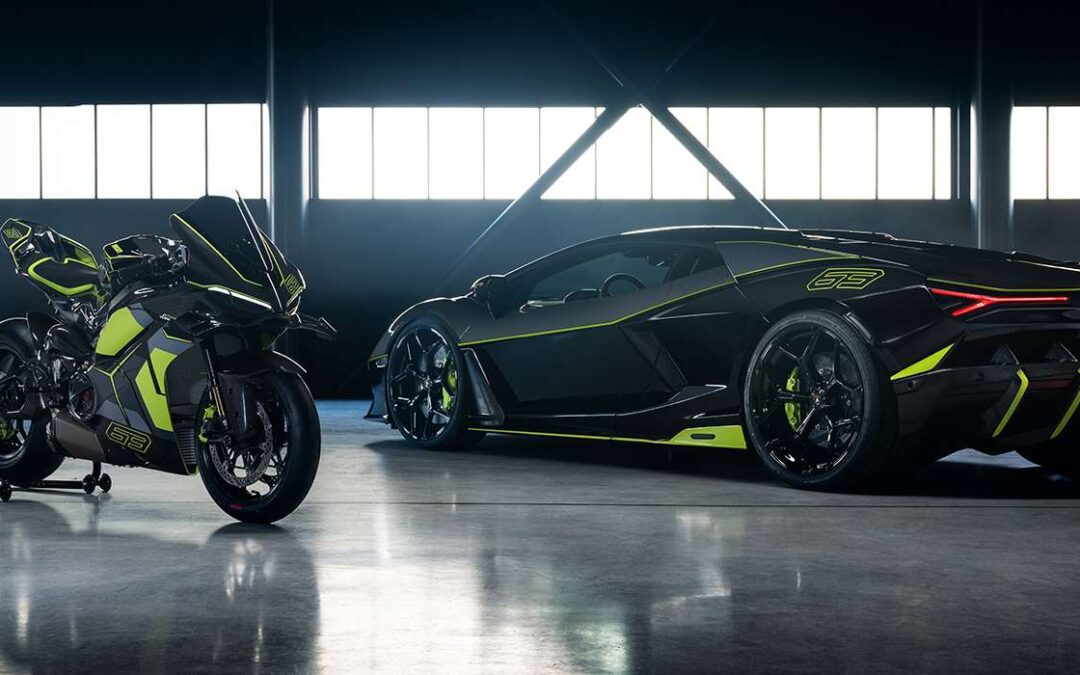
Italian Icons Unite: Ducati and Lamborghini Unleash the Panigale V4 Lamborghini
The hallowed halls of Italian engineering have once again witnessed the forging of an extraordinary alliance. Ducati and Lamborghini, two titans of Italian design and performance, have ignited the passion of enthusiasts worldwide with the unveiling of their latest collaborative masterpiece: the breathtaking Ducati Panigale V4 Lamborghini. This marks the third thrilling chapter in a partnership built upon shared foundations of cutting-edge technology, adrenaline-pumping sportiness, and an unwavering commitment to exclusivity.
These aren’t just brands; they are symbols of Italy itself, embodying a legacy of innovation and a relentless pursuit of perfection. Rooted deep within the legendary Motor Valley of Emilia-Romagna, where the very air crackles with the spirit of speed and ingenuity, Ducati and Lamborghini consistently conjure up vehicular artistry. Following in the tyre tracks of the sensational Ducati Streetfighter V4 Lamborghini and the formidable Diavel 1260 Lamborghini, this new creation promises to be an instant object of desire, a fusion of technology, performance, and sheer visual drama that will set pulses racing.
This latest episode in the celebrated union brings together the undisputed flagships of each marque. On two wheels, the Panigale V4 S, Ducati’s latest and most sophisticated Superbike, steps into the spotlight. On four, the Lamborghini Revuelto, a revolutionary force redefining the very concept of the super sports car, provides the inspiration. Both machines stand as the pinnacle of their respective realms, showcasing the most refined and potent powertrains each brand has ever conceived. The Ducati’s visceral Desmosedici Stradale V4 engine and the Lamborghini’s thunderous V12 represent the very essence of their technical philosophies and design ethos.
Prepare for a sensory overload, a symphony of Italian engineering prowess that will once again capture the hearts and minds of discerning enthusiasts across the globe. The Ducati Panigale V4 Lamborghini isn’t just a motorcycle; it’s a statement, a testament to the enduring power of Italian passion and the magic that happens when two iconic forces collide.
by Lamborghini Fan 1 | Apr 16, 2025 | Vintage / History
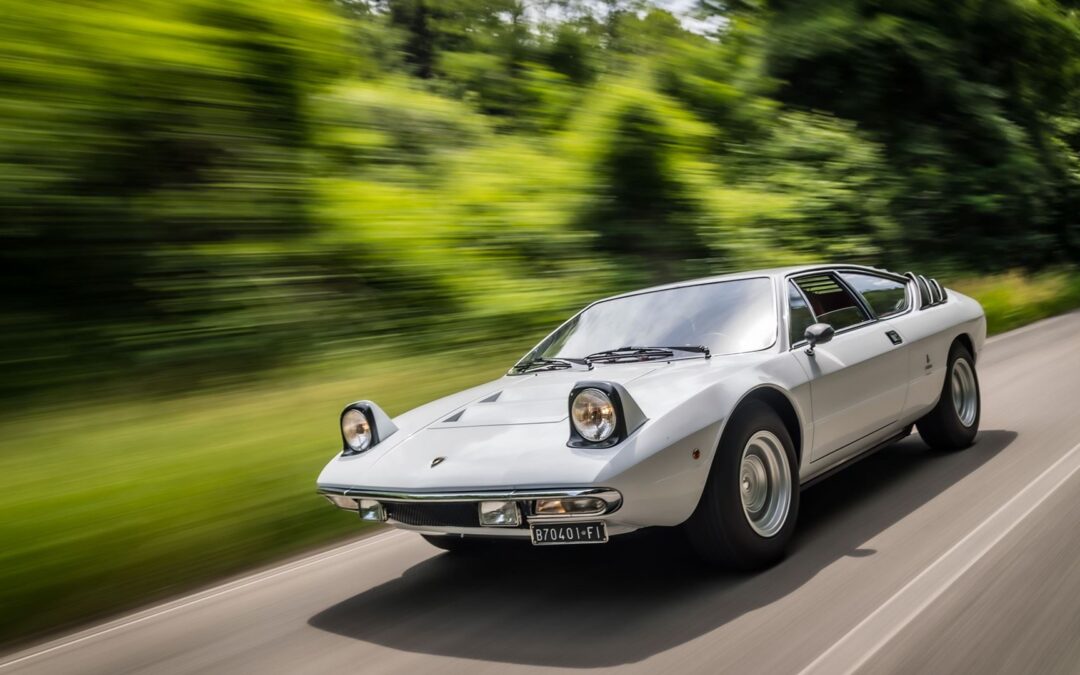
Lamborghini. The name conjures images of fire-breathing bulls, razor-sharp angles, and ear-splitting roars. We drool over the Countach, revere the Miura, and now find ourselves captivated by the Revuelto. But nestled between these legendary beasts, a lesser-known gem exists, quietly whispering its own tale of rebellious innovation: the Lamborghini Urraco.
Often overshadowed by its more flamboyant siblings, the Urraco represents a pivotal moment in Lamborghini’s history. Launched in 1970, it was Ferruccio Lamborghini’s vision for a more accessible, more practical, yet still undeniably Lamborghini sports car. He wanted to capture a broader market, offering something less extreme than the supercar titans while retaining the brand’s core DNA. The Urraco was meant to be a disruptive force, a “baby Lamborghini” for a new generation.
And disruptive it was. Designed by Marcello Gandini of Bertone, the Urraco showcased a striking, wedge-shaped profile, a hallmark of the era, but with a unique twist. Its clean lines, pop-up headlights, and integrated rear spoiler gave it a distinctly modern aesthetic, even by today’s standards. It was a departure from the curvaceous forms of its predecessors, hinting at the angular future of Lamborghini design.
Under the hood, or rather, behind the seats, resided a transversely mounted 2.5-liter V8. This smaller displacement engine, while less potent than the monstrous powerplants found in other Lamborghinis, still packed a punch. Initially producing around 220 horsepower, it offered a thrilling driving experience, especially when paired with the Urraco’s relatively light weight and nimble handling. Later iterations, like the P200 and P300, offered smaller and larger engines, respectively, to cater to different markets and performance preferences.
The Urraco’s interior, while spartan compared to modern luxury cars, exuded a certain charm. The simple dashboard layout, the leather-wrapped steering wheel, and the supportive bucket seats created a driver-focused environment. It wasn’t about opulent comfort; it was about the pure joy of driving. The Urraco was designed to connect the driver to the machine, providing a visceral and engaging experience.
However, the Urraco’s journey wasn’t without its challenges. Production delays, quality control issues, and the global oil crisis of the 1970s hampered its initial success. It struggled to compete with established rivals, and ultimately, production ceased in 1979 after just over 790 examples were built.
Despite its relatively short lifespan and its initial struggles, the Urraco has since gained a cult following. Collectors appreciate its unique design, its historical significance, and its engaging driving dynamics. It represents a different side of Lamborghini, a more approachable and perhaps more relatable side. It’s a reminder that Lamborghini isn’t just about raw power and extravagant styling; it’s also about innovation, passion, and the pursuit of driving pleasure.
The Urraco might not be the first Lamborghini that comes to mind, but it deserves a place in the brand’s pantheon of legends. It’s a testament to Ferruccio Lamborghini’s vision, Marcello Gandini’s design prowess, and the enduring spirit of the raging bull. It’s a car that dared to be different, a car that whispered when others roared, and a car that continues to captivate enthusiasts decades later. In the world of Lamborghini, the Urraco might be the unsung hero, but its melody is one that resonates deeply with those who appreciate automotive artistry and the thrill of the drive.
Units produced
- P250 Urraco: 1970-1976: 520
- P200 Urraco: 1974-1977: 66
- P300 Urraco: 1975-1979: 190
by Lamborghini Fan 1 | Apr 3, 2025 | Modern, Recent Models
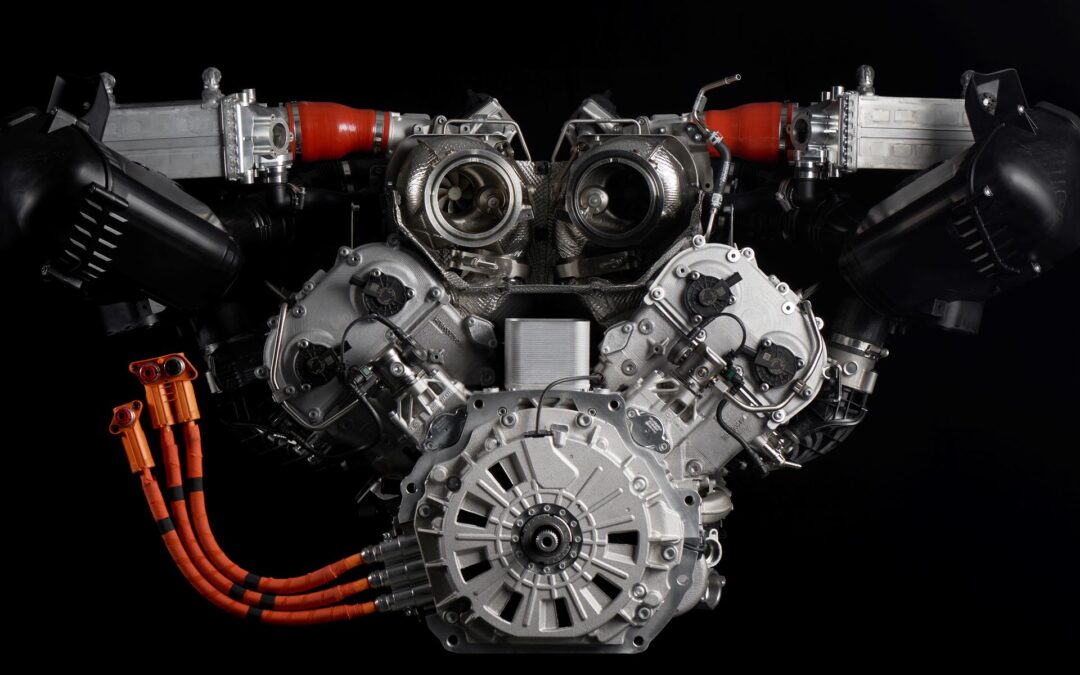
Forget what you think you know about hybrid powertrains. Lamborghini has just redefined the game with the Temerario, a machine where the visceral roar of a high-revving V8 meets the instantaneous punch of electric motors. At the heart of this mechanical masterpiece lies a twin-turbocharged V8, a bespoke creation born in the hallowed halls of Sant’Agata Bolognese, and it’s a revelation.
This isn’t just another forced-induction engine. This is a meticulously crafted symphony of power, designed to hit an astonishing 10,000 rpm. Yes, you read that right. Ten. Thousand. RPM. This feat alone sets the Temerario apart, placing it in a rarefied atmosphere of hypercars.
Let’s delve into the numbers. The V8 itself unleashes a staggering 800 horsepower, peaking between 9,000 and 9,750 rpm. It’s a testament to Lamborghini’s engineering prowess, pushing the boundaries of what’s possible with a turbocharged engine. And the torque? A brutal 730 Nm, available from 4,000 to 7,000 rpm, ensuring relentless acceleration across the rev range.
But the Temerario is more than just a powerful V8. It’s a hybrid, seamlessly blending the internal combustion engine with three electric motors. The P1 motor, nestled between the V8 and the gearbox, acts as a torque-fill, eliminating any hint of turbo lag and delivering an almost telepathic response. It’s this electric boost that creates the sensation of “linear and limitless progression” all the way to that incredible 10,000 rpm redline.
The turbochargers themselves are strategically placed within the “hot V8” configuration, optimizing packaging and thermal management. This compact layout ensures maximum efficiency and performance, even at blistering top speeds.
Lamborghini’s engineers drew heavily from motorsport expertise to achieve these stratospheric revs. A flat-plane crankshaft, a hallmark of racing engines, ensures optimal fluid dynamics and a unique, spine-tingling exhaust note. Titanium connecting rods, chosen for their strength and lightness, minimize rotating mass, allowing the engine to spin freely. And the racing-inspired finger followers, coated in DLC (Diamond Like Carbon), are built to withstand the extreme stresses of 11,000 rpm.
The result is an engine that defies categorization. It possesses the smooth, linear power delivery of a naturally aspirated V10, combined with the raw, explosive force of a modern turbo engine, all augmented by the instantaneous torque of electric motors. It’s a unique blend, a testament to Lamborghini’s relentless pursuit of innovation.
The Temerario’s engine isn’t just a powerplant; it’s a statement. It’s a declaration that the future of performance is a harmonious blend of old and new, a symphony of turbos and electric fury, creating a driving experience that’s both visceral and technologically advanced. Lamborghini has raised the bar, and the automotive world is taking notice.
The All New Temerario Powertrain Explained: